
Soca music, Carnival anthems and Caribbean party classics
Before there was soca, there was calypso — the music that taught the Caribbean to sing about itself. Everything on this site runs back to it: soca was created by a calypsonian, the Road March was a calypso contest long before it was a soca one, and the great names of the soca era learned their trade in the calypso tents. If soca is the sound of Carnival today, calypso is where Carnival learned to talk.
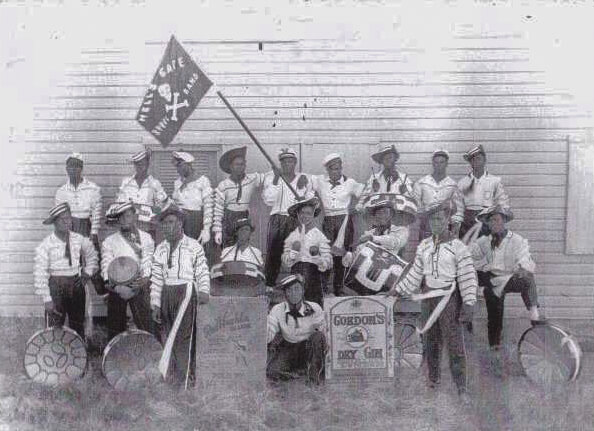
Calypso grew up in nineteenth-century Trinidad, out of African drumming and song traditions carried across the Atlantic and the French Creole culture of the island’s plantations. Its first stars were the chantwells — the lead singers of the stickfighting bands — whose songs praised their own fighters, mocked rivals, and commented on everything happening around them, first in French patois and then in English. Under slavery and long after Emancipation, the calypsonian was part journalist, part comedian, part opposition spokesman: the “poor man’s newspaper.” A good calypso could make a whole island laugh at a governor, mourn a disaster, or argue about a war — and the sharpest weapon in it was picong, the art of the witty, cutting put-down.
Trinidad’s music reached the world early. Lovey’s String Band travelled to New York to record in 1912, and through the 1930s calypsonians like Atilla the Hun and the Roaring Lion were recording in the United States and carrying the music to American audiences. Lord Invader’s “Rum and Coca-Cola,” written about the American wartime presence in Trinidad, became a huge hit in the United States in the Andrews Sisters’ version — and Invader travelled to New York and fought through the courts to be recognised as its writer. In 1956 Harry Belafonte’s album Calypso — widely credited as the first LP to sell a million copies — put the word “calypso” on lips everywhere, carried by a Jamaican dockworkers’ song, “Day-O.” The golden age had made calypso, for a moment, the most famous sound in the world.
The post-war decades belonged to two men. The Mighty Sparrow, the Calypso King of the World, won the Calypso Monarch title eight times with songs that were funny, biting and beautifully sung — “Jean and Dinah,” his 1956 breakthrough, marked the departure of the American servicemen from Trinidad and announced a genius. Lord Kitchener, the Grandmaster, was the supreme melodist: grand enough to sing “London Is the Place for Me” as he stepped off the Empire Windrush in 1948, and so beloved on the road that he won the Road March eleven times — the record Machel Montano has only just drawn level with. Around them stood a pantheon: Calypso Rose, who broke the men’s hold on the titles — the first woman to win the Road March, in 1977, and the Monarch in 1978 — and was still making the world dance with “Leave Me Alone” in 2016; Black Stalin, five times a Monarch, the music’s conscience, preaching Caribbean unity; Shadow, the dark original in the wide-brimmed hat, whose eerie, philosophical songs sounded like nobody else; and David Rudder, who carried the classic art — crowned Monarch in 1986 — straight into the modern era.
Calypso’s home ground was the tent: the seasonal theatres where, each Carnival, the calypsonians unveiled their new songs before a live audience that came as much for the words as the music. The season built to Dimanche Gras night and the Calypso Monarch final, where the crown went not to the best party song but to the best calypso — judged on lyrics, melody and performance. That is the deep difference between the two great Trinidad titles: the Road March belongs to the road, but the Monarch belongs to the writers. In the tents you could also hear extempo — calypsonians improvising verses on the spot, duelling in rhyme — picong at its purest.
Trinidad is where calypso took its classic form, but the art travelled the whole eastern Caribbean — kaiso, as it is also called, has deep traditions in Barbados, whose calypsonians compete for the Pic-O-De-Crop crown, and in Grenada, St. Vincent and the other islands, each with its own masters and its own edge. Jamaica’s mento is a cousin rather than a sibling — a related island music with its own history — and the two are often confused abroad, but the calypso heartland is the eastern Caribbean, and its capital is Port of Spain.
When Lord Shorty began his experiments in the early 1970s, he was not an outsider — he was a calypsonian, and what he made was quite literally the soul of calypso: soca. The child has grown bigger than the parent on the road, but the parent never left the season. Every Carnival still opens its tents, still crowns a Monarch, and still produces classic calypso alongside the soca — the commentary, the storytelling and the wit that soca inherited and carries in every verse. To understand the music on the rest of this site, start here: this is the root.
The sweet standard every calypsonian had to know — golden-age Trinidad in a single song.
Written about the American bases in Trinidad, a hit around the world — and the song its writer crossed an ocean to claim as his own.
Sung on arrival aboard the Empire Windrush: calypso greeting a new chapter of Caribbean life.
The Yankees were leaving, the young Sparrow saw the story first — and took his first Monarch crown with it.
A Jamaican folk song that carried the calypso name to every corner of the earth.
The record that made the young Tobago-born singer impossible to ignore — the Queen arriving.
The haunted masterpiece: calypso’s dark, philosophical side, and one of the bridges toward soca.
A sermon on Caribbean unity set to an irresistible groove — a Monarch winner with a message that never dated.
A warning dressed as a melody: progress that leaves the people behind is no progress at all.
The Grandmaster’s gift to the steelpan — a Panorama evergreen that bands still measure themselves against.
A love letter to the art form itself, from the man who carried it into the soca age.
Half a century after “Fire in Me Wire,” the Queen was still making the world dance. The mother music never retired.
Keep exploring: a short history of soca · 25 essential soca songs